Professional Tree Trimming in Augusta, GA
Tree Removal Augusta offers professional tree trimming Augusta GA homeowners and businesses can request with a free estimate. Careful pruning removes dead, overgrown and hazardous branches while helping protect your trees and your property.
☎ (706) 204-7547Our Tree Trimming Augusta GA Services
Most tree trimming calls fall into one of six straightforward categories. The right type of pruning depends on the tree, its condition and what you need it to accomplish.
Residential Tree Trimming
Overgrown oaks and pines, limbs over roofs and branches blocking light or creating clearance problems.
Commercial Tree Trimming
Parking-lot clearance, sightlines and routine maintenance for HOAs, property managers and businesses.
Routine Tree Trimming
Scheduled maintenance that identifies structural problems while they are still smaller and easier to address.
Pre-Storm Trimming
Removal of deadwood, cracked limbs and weak attachments before storm season creates a bigger problem.
Storm-Damaged Pruning
Broken and hanging limbs are removed safely, with restoration pruning considered when a damaged tree is worth keeping.
View Clearing
Open sightlines and bring in sunlight without unnecessarily damaging or over-pruning the tree.
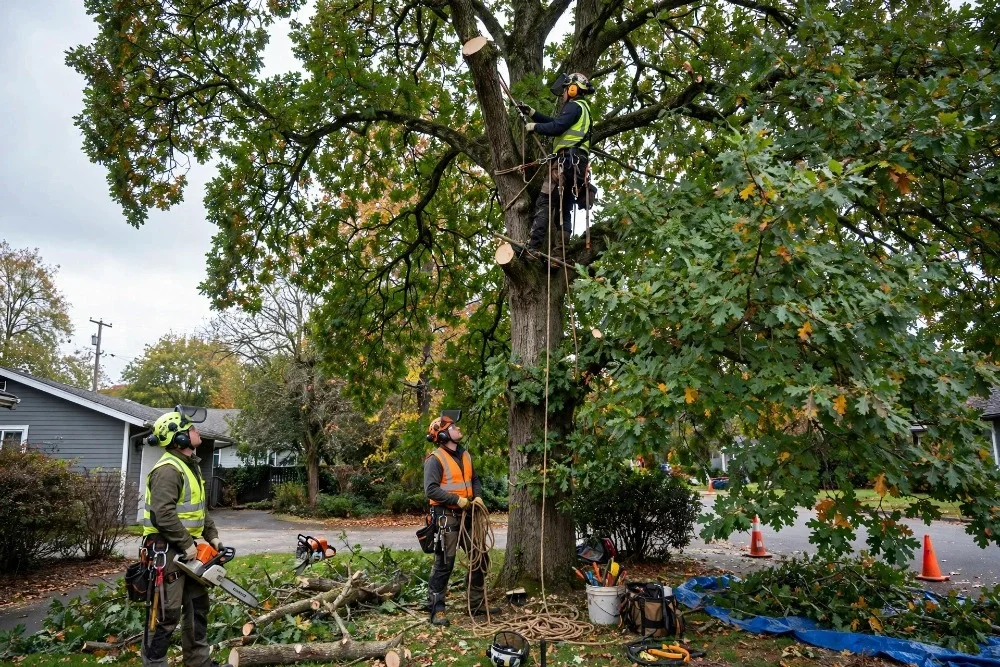
What Is the Difference Between Tree Trimming and Tree Pruning?
In everyday use, tree trimming and tree pruning often mean the same thing: cutting branches from a tree. Some arborists use “trimming” for shaping and “pruning” for health-based cuts. What matters most is that each cut has a clear purpose.
| Tree Trimming | Tree Pruning | |
|---|---|---|
| Common meaning | Tidying and shaping overgrown growth | Removing specific branches for health, structure or safety |
| Typical goal | Clearance and appearance | Tree health, strength and risk reduction |
| Good practice | Proper cuts, never topping | Proper cuts guided by ANSI A300 |
Tree Pruning Augusta GA: The Main Pruning Types
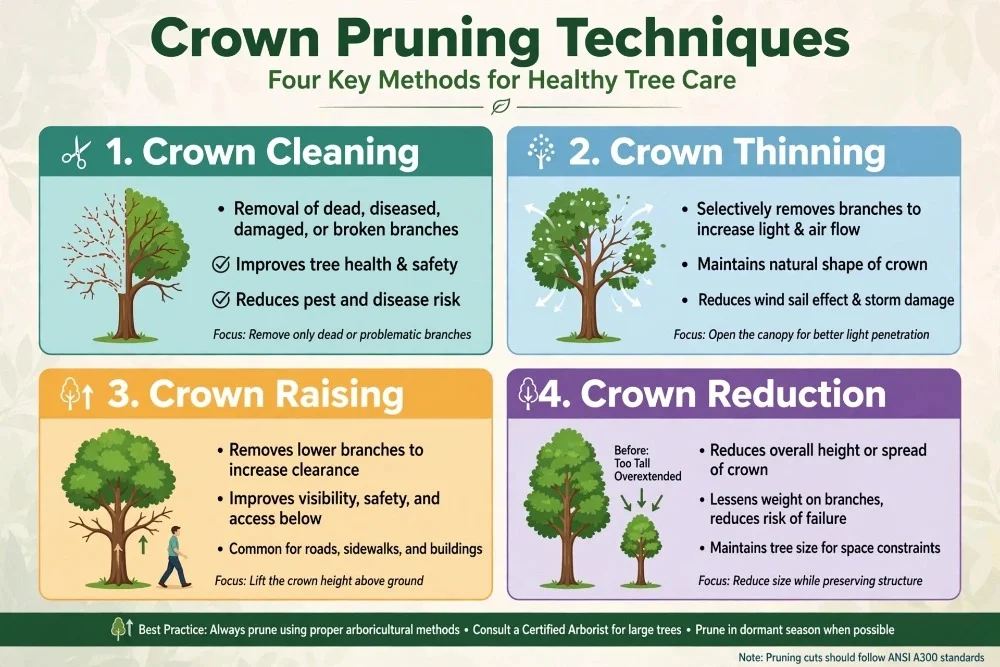
Professional tree pruning uses standard terminology so your estimate can clearly explain what will happen to your tree.
Crown Cleaning
Removes dead, dying, diseased, broken and rubbing branches. Ideal for trees with deadwood or storm-broken limbs.
Crown Thinning
Selectively removes branches so light and air can pass through a dense canopy.
Crown Raising
Removes lower branches to provide clearance around roofs, driveways, fences and walkways.
Crown Reduction
Reduces height or spread by cutting back to suitable side branches. It is not the same as topping.
Structural Pruning
Develops stronger branch structure in young trees by correcting competing leaders and weak forks.
View Clearing
Opens views and brings in sunlight while preserving as much healthy tree structure as possible.
Topping cuts branches back to stubs and can create weak, poorly attached regrowth. Proper crown reduction uses suitable lateral branches instead.
Signs Your Trees Need Trimming
Look up before storm season, not after. These are some of the warning signs that deserve professional attention.
What Does It Cost to Trim a Tree in Augusta?
Published local estimates put tree trimming in Augusta at roughly $190–$250 per hour for a three-person crew, or around $341–$509 for one medium tree. Your actual price depends on the tree, access, equipment and scope of work.
| Service | Published Augusta Range | What Changes It |
|---|---|---|
| 3-person trimming crew / hour | $190–$250 | Crew size and equipment |
| One medium tree | About $341–$509 | Height, access and amount of work |
| Emergency trimming | About $250 / hour | After-hours and storm demand |
| Medium tree removal | About $477–$651 | Large or difficult trees cost more |
| Stump grinding | Roughly $100–$400 | Stump diameter and access |
These are published estimates, not quotes. Most professional jobs are quoted by the project so you know the total before work begins.
What Changes the Price?
Where a tree sits can matter just as much as where you live. A tree in an open backyard is usually simpler than one over a roof, beside a fence or close to energized power lines.
- Tree height and trunk size
- Whether a climber or bucket truck is required
- Distance from houses, fences and structures
- Amount of material that needs to be removed
- How much debris must be hauled away
- Emergency or after-hours work

Is It Cheaper to Cut a Tree Down or Trim It?
Trimming is usually less expensive than removal, but the right choice depends on the tree’s condition and the risk it creates.
The tree is healthy and structurally sound, the problem is limited to specific branches, and you want to preserve shade.
The tree is dead, badly decayed, cracked, split, dangerously leaning or has serious root-system damage.
What Is the Best Time of Year to Trim Trees in Augusta?
Late winter is generally a good period for many structural pruning jobs, while hazardous dead or broken branches should not wait.
Best for Structural Work
Dormant trees make structure easier to see and are commonly suitable for major pruning.
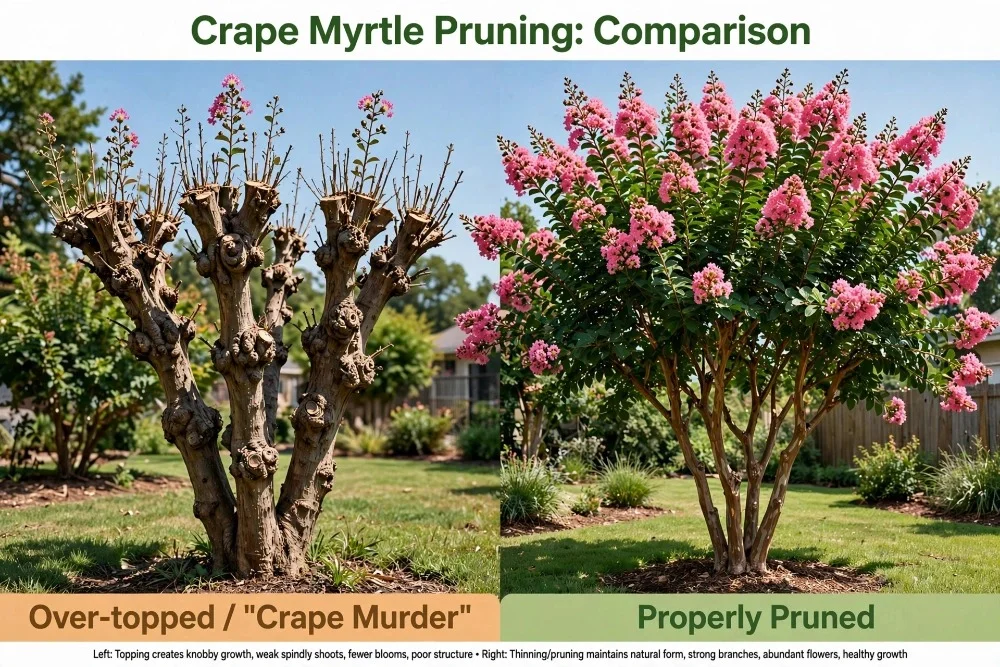
Crape Myrtles
Prune before new growth starts. They bloom on new growth.
Light Work
Heavy pruning is generally discouraged because fresh cuts heal more slowly.
Safety Work
Dead, broken or hazardous branches should be addressed when they become a safety concern.
When Should You Trim Oak Trees in Georgia?
Non-urgent oak pruning is generally scheduled during the dormant season, from late fall through about February. Spring and early summer pruning can increase concerns around oak wilt because fresh pruning wounds can be exposed during periods of greater beetle activity.
- Schedule routine oak pruning during the dormant season.
- Avoid unnecessary shaping and thinning during spring and early summer.
- Do not delay professional attention when a damaged limb creates an immediate hazard.
- Ask the arborist to confirm timing for your specific tree and situation.
How Often Should You Trim Trees?
Mature trees often benefit from periodic professional inspection, while young trees usually need more frequent structural guidance.
| Tree | General Guide |
|---|---|
| Oaks | Every 3–5 years, generally during the dormant season |
| Loblolly pines | Little shaping needed; remove dead or hanging limbs as needed |
| Crape myrtle | Light pruning in late winter; avoid heavy cutting |
| Pecan and large shade trees | Every 3–5 years and after significant storms |
| Young trees | Every 1–2 years for structural development |
| Palms | Remove dead or hanging fronds; avoid cutting healthy green fronds |
What Is “Crape Murder”?
“Crape murder” describes the practice of cutting crape myrtles back to thick stubs every year. This can leave knobby cuts and weak regrowth and generally is not necessary.
Better maintenance focuses on selective pruning rather than cutting every limb back to the same height.
- Prune in late winter or early spring before new growth.
- Remove suckers from the base.
- Remove lower branches as the tree develops.
- Remove crossing and rubbing branches.
- Never cut every limb back to the same height.
Pre-Storm and Storm-Damaged Tree Pruning
Augusta is inland, but tropical systems and severe thunderstorms can still bring damaging winds. Preventive trimming focuses on deadwood, cracked limbs, weak attachments and heavy branches positioned over homes, driveways and play areas.
After a storm, cleanup removes broken or hanging limbs. When a tree is worth saving, restoration pruning may be used as a longer-term plan to rebuild its structure.
Trimming Near Rooftops and Power Lines
Branches over a roof can scrape shingles, clog gutters and increase the chance of storm-related property damage. Proper clearance and structural pruning can reduce the risk.
Do not trim energized lines yourself. Stay away from trees touching lines and contact the appropriate electric utility. Specialized line-clearance work requires properly qualified crews.
What Good Pruning Avoids
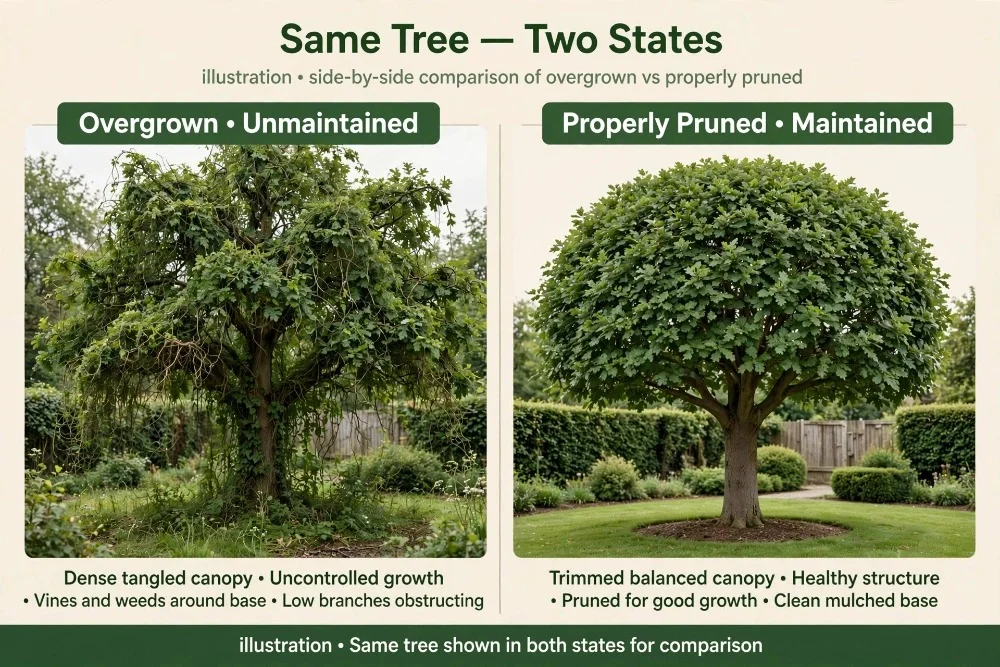
Good pruning is also about what a professional leaves alone. Excessive or incorrect cutting can create bigger problems later.
Creates weak regrowth and unnecessarily injures the tree.
Removing interior growth and leaving foliage only at branch tips weakens structure.
Proper cuts should generally be made just outside the branch collar.
Removing too much live foliage at once can stress the tree.
Spikes wound live bark when the tree is intended to remain standing.
Every branch removed should have a clear reason tied to health, structure or safety.
How Do I Choose a Tree Care Company in Augusta?
Look for proof of insurance, a verifiable arborist credential, a written estimate and genuine local reviews. Georgia does not license tree services at the state level, so a vague “licensed” claim does not tell you enough.
- Ask for current liability and workers’ compensation insurance.
- Ask whether an ISA Certified Arborist is involved.
- Request a written estimate explaining exactly what will be cut.
- Ask whether the company refuses to top trees.
- Verify a real local business address and phone number.
- Be cautious with unsolicited storm door-knockers and cash-upfront demands.
Areas We Serve
Tree trimming is available across Augusta and surrounding CSRA communities. Local rules and utilities can differ by jurisdiction.
Frequently Asked Questions
Can you trim trees near power lines?
Is topping a tree a good idea?
Is emergency tree trimming available?
Is tree trimming available for businesses and HOAs?
What does the free estimate include?
Can I trim branches from my neighbor’s tree?
Does homeowners insurance cover tree trimming?
Get Your Free Tree Trimming Estimate
If you want healthier trees and a safer property before the next storm, tree trimming Augusta GA homeowners can rely on starts with a professional look at your trees. Your estimate explains the work, the reasons for it and the price before anything begins.
(706) 204 7547Tree Removal Augusta · 100 Example Street, Augusta, GA 30901